The Executive Question
Microsoft 365 Copilot has moved beyond experimentation. For IT and business leaders, the question is no longer, “Can Copilot save time?” The better question is, “Can we turn Copilot adoption into measurable capacity, faster decisions, better customer responsiveness, and governed innovation?”
At Netwoven, we see successful Copilot programs start with a clear business case, a secure data foundation, and focused adoption scenarios. The license cost is visible, but the value comes from how well organizations redesign work around AI.
The strongest ROI stories connect Copilot usage to outcomes leaders already care about: cycle time, quality, throughput, employee experience, risk reduction, and customer impact.
1. Start with Business Scenarios for Microsoft 365 Copilot Adoption
A credible Copilot business case begins with work patterns, not license allocation. Identify where teams lose time today: meetings, email, search, reporting, proposal development, approvals, support tickets, onboarding, or policy interpretation.
Capture a simple baseline before broad rollout. Measure current cycle times, rework, search effort, employee sentiment, and process bottlenecks. Then compare the “before” and “after” by persona or business function.
Netwoven perspective: Do not start with every employee. Start with personas where Copilot can solve visible business friction – sales, project management, finance, HR, legal, customer service, and IT operations.
2. Microsoft 365 Copilot ROI: Measure What Matters
- Tier 1 – Adoption: weekly active use above 60%; two-plus daily habits per user.
- Tier 2 – Productivity: hours saved, first-draft cycle time, rework volume.
- Tier 3 – Business Outcome: sales cycle length, case handle time, month-end close.
Adoption dashboards are useful, but they do not prove value by themselves. Leaders need a three-level view: usage, productivity improvement, and measurable business outcomes.
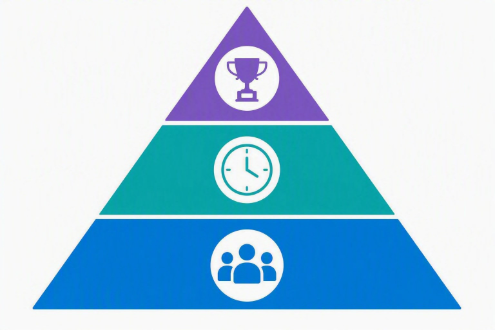
Client-ready takeaway: Use adoption metrics to manage the rollout, productivity metrics to validate behavior change, and business metrics to justify continued investment.
3. Convert Time Savings into Business Capacity
Time savings are valuable only when they are reinvested into higher-value work. Copilot value becomes tangible when saved time increases customer-facing capacity, reduces backlog, accelerates decisions, improves service levels, or helps teams absorb growth.
Use a conservative realization factor, such as 40–60%, instead of assuming every saved minute becomes productive capacity. This keeps the ROI model credible with finance stakeholders.
| Per-User ROI Model | Input | Annual Value |
| Hours saved per month | 9 hrs | 108 hrs |
| Realization factor | 50% | 54 hrs |
| Loaded hourly rate | $75 | $4,050 |
| Copilot license | $30/mo | ($360) |
| Enablement + governance | – | ($140) |
| Net benefit per user | $3,550 | |
| ROI per user | $3,550 ÷ $500 | 710% |
Formula: ROI % = [(Hours saved × Realization × Loaded rate × 12) − TCO] ÷ TCO. Netwoven recommends adjusting the model by persona, adoption maturity, and use-case complexity rather than applying one flat assumption across the entire organization.
4. Look Beyond Labor Savings
Copilot can improve more than speed. Track quality, rework, decision confidence, onboarding time, employee experience, and customer responsiveness. These measures help leaders see whether Copilot is improving the way work is done.
The strategic value is consistency. When teams use AI to prepare better, write clearer, find knowledge faster, and reduce avoidable rework, the organization raises the quality floor across the enterprise.
5. Make Governance a Value Enabler
Copilot works within existing permissions. If information is overshared today, AI can make that exposure more visible. That is why governance, permissions, sensitivity labels, DLP, and lifecycle management must be part of the ROI plan.
Netwoven perspective: Governance should not slow Copilot adoption. It should make adoption safer, more trusted, and easier to scale. A governed foundation improves response quality, reduces risk, and increases business confidence.
6. Build Microsoft 365 Copilot ROI Momentum in 90 Days
Copilot value comes from a repeatable operating rhythm: sponsorship, prioritized scenarios, measurement, enablement, and governance. A 90-day plan gives leaders enough time to test value before scaling broadly.
- Days 1–30: confirm sponsors, select personas, baseline current work, define priority scenarios, and address critical permission risks.
- Days 31–60: launch pilots, train champions, publish prompt examples, monitor usage quality, and collect early feedback.
- Days 61–90: measure value, compare against baseline, reclaim inactive seats, improve governance, and scale proven scenarios.
A monthly executive review should track adoption quality, value realized, risks remediated, funding decisions, and the next scenarios to scale.
7. Prepare for Agentic Workflows
The next phase of Copilot value will move from individual assistance to agentic workflows. As Copilot Studio agents mature, leaders will need to measure workflow impact, process reliability, human oversight, exception handling, risk controls, and consumption costs.

Netwoven helps organizations move from Copilot pilots to measurable business impact by combining adoption strategy, Microsoft 365 governance, security readiness, business process design, and AI enablement. The goal is simple: make Copilot practical, trusted, and valuable at enterprise scale.
For further queries, please contact our experts.